


Poke Trivia
3.92.00 Reviews
App Specs
- Version
- 1.0.2
- Updated On
- License
- Free
- Downloads
- 10,000+
- Developer
- Studio Kah
- Categories
- Trivia
- Platform
- Android
Screenshots
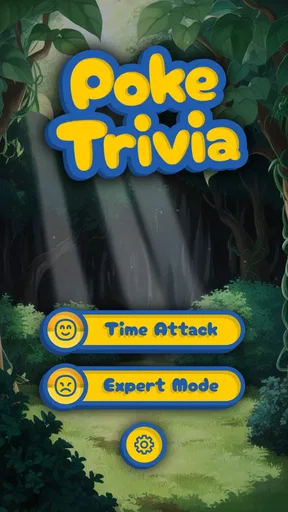
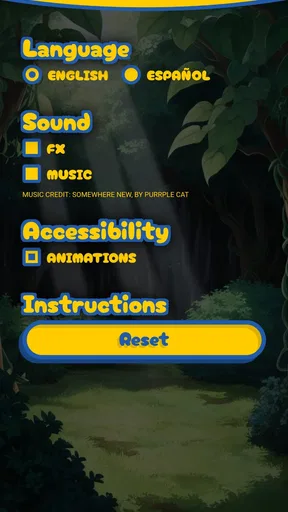
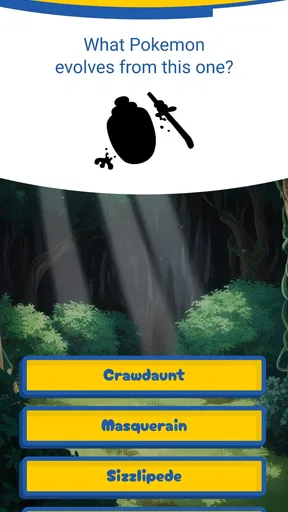
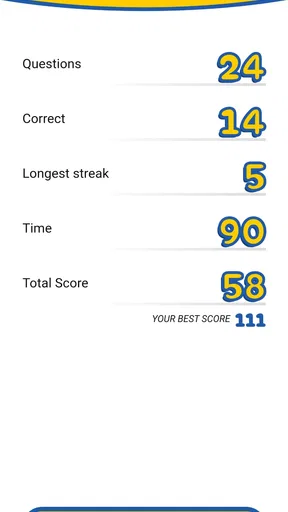
 Analysis by AppCompare
I approached Poke Trivia as the kind of small quiz game that can turn a spare moment into a friendly test of memory. It is a free trivia game from Studio Kah, built around Pokémon knowledge and aimed at people who already enjoy identifying creatures, recalling moves, and recognizing details from the wider Pokémon world. My first impression was that its appeal depends less on elaborate presentation and more on whether you enjoy the simple pressure of seeing a question and trusting your answer.
That makes it especially interesting on a shared phone or tablet. One person can hand the device to another, ask them to take a turn, and compare reactions without needing a long setup. I would not treat it as a complete family game platform, because it is still a focused trivia title rather than a household-management tool. However, for a quick challenge between siblings, friends, or a parent and child, the basic idea is easy to understand.
How Poke Trivia fits into a shared household
A realistic use case is a short wait before dinner, a car journey when someone else is handling navigation, or a few minutes on the sofa after school. Instead of opening a large game that demands concentration and a lengthy session, I can imagine passing the device around and letting each person answer a few questions. The Pokémon theme gives the group an immediate subject to discuss, even when players have different levels of experience.
The strongest household benefit is its low barrier to entry. Someone who knows Pokémon well can start testing themselves immediately, while a less experienced player can participate simply by making guesses and learning from the discussion around each question. That makes it more welcoming than a competitive game that assumes everyone understands complicated rules.
There is also a useful social distinction here: the game works best when the device is treated as a turn-taking object rather than a personal profile. I would announce whose turn it is, keep the screen facing that player, and let everyone else debate quietly until the answer is chosen. This avoids the common problem where the fastest person dominates every round.
For a household with several Pokémon fans, I would create a simple rotation: one player reads the question, another answers, and the group discusses whether the choice makes sense. If the interface presents the answer immediately, that routine keeps the session moving. If someone is still learning, the group can use each question as a miniature lesson rather than treating every mistake as a loss.
Why the short-session format matters
I would choose this game for brief entertainment, not for an evening-long activity with a carefully balanced scoring system. Trivia is naturally easy to start and easy to stop, which suits shared devices that are also used for messaging, videos, schoolwork, or other games. A child can have a turn without taking over the tablet for an hour, and an adult can join without first learning a complex control scheme.
Worth Reading Before You Choose

Flipboard Shows What News Apps Must Do Beyond the Feed

Switching to Android Auto Means Rethinking Your Driving Routine

Google Calendar Makes a Crowded Week Easier to Manage

Ludo King Makes the Most of the Minutes Between Plans

Baby Panda World Brings Quick Play to Modern Phones, but Its Game Library Feels Busy

ESPN’s Live Game View Makes Following Close Games Easier
The trade-off is that a lightweight quiz may feel repetitive sooner than a full Pokémon adventure. There is no role-playing journey to provide variety, no exploration to interrupt the questions, and no strategic battle system to deepen the experience. If your household wants a game with a story, collection goals, or cooperative missions, this is the wrong kind of download. Its value is concentrated in the question-and-answer moment.
My practical tip is to use it as a conversation starter. When a player misses an answer, ask what clue led them toward that choice. That turns a solitary guessing exercise into a shared memory game and makes the app more useful for mixed-age groups. It also reduces the frustration that can come from seeing a younger player lose repeatedly against someone with years of Pokémon experience.
Setup boundaries on a device used by more than one person
The game is free, so the initial decision is straightforward for someone who wants to try it without committing money. It belongs to the trivia category, carries an Everyone age rating, and was released on January 30, 2025. Those details make it look approachable for a broad audience, but an age label should not replace ordinary parental judgment about how a child uses a connected device.
I would install it on the household device only after deciding who is allowed to use that device and when. The app itself should not be assumed to separate a child’s activity from an adult’s activity unless the operating system or the device already provides those boundaries. If several people share one screen, agree on turn-taking and screen handling before starting. That small conversation prevents arguments more effectively than trying to solve them after someone has rushed through another player’s turn.
The technical requirements are modest: the listed minimum operating system is Android 7.0, so many older Android devices may be able to run it. That does not guarantee the same experience on every phone or tablet, because screen size, performance, and the condition of the device still matter. On a small phone, I would keep the screen close to the active player and avoid having several people crowd around it.
The current version is 1.0.2. For a new or recently updated quiz app, I would make sure the device has enough free space for normal installation and that the operating system is supported before planning a group session. I would also open the game once privately, check how the questions are presented, and learn whether the pace suits the players. That is not about changing settings; it is simply a sensible way to avoid discovering the interface for the first time in front of impatient children.
One boundary matters particularly on a shared device: do not assume that a quiz app will preserve separate progress for every member of the household. If the experience is mainly turn-based, this may not matter. If the game records activity in one place, however, the family should agree whether that shared result belongs to the device, the group, or the person currently playing. Keeping expectations clear is better than promising individual records that may not exist.
Coordinating turns without making the game feel like homework
Trivia can become surprisingly competitive when one player already knows the subject. I would use a simple rule that everyone answers before the correct choice is revealed. Players can write a letter on paper, point at an option only when invited, or say their answer aloud while one person controls the screen. These methods do not require a special feature from the app; they are household habits that make a shared session fairer.
Another useful approach is to divide the group by confidence rather than age. A knowledgeable player might explain the reasoning behind an answer, while a beginner gets extra time to make a choice. This keeps the strongest participant involved without turning the session into a one-person performance. It also gives younger players a reason to remember the question instead of simply accepting the answer from an older sibling.
I would avoid using the game as a test of intelligence. Pokémon knowledge is a specific interest, and a wrong answer often reflects familiarity rather than ability. A player may recognize characters from one part of the franchise but not know details from another. If the household treats every question as an opportunity to compare memories, the game remains friendly. If every mistake becomes a scorekeeping argument, even a good quiz quickly loses its charm.
For coordination, a short agreed session works better than an open-ended promise to keep playing until someone wins. Decide whether everyone gets the same number of turns, then stop while the group is still enjoying it. This is especially helpful when the device belongs to a child but must later be used for another task. The game’s quick nature supports that boundary, provided the adults enforce it consistently.
There is a less obvious benefit to this format: it can reveal which kind of Pokémon knowledge each player actually enjoys. One person may remember visual details, another may know names, and someone else may be better at broader franchise facts. Rather than treating the quiz as a single measure of expertise, I would use those differences to choose future conversation topics or other games. The app is most engaging when it helps people compare interests, not just scores.
Age, trust, and the limits of the Everyone label
The Everyone rating makes Poke Trivia a reasonable candidate for a family device, particularly when the intended players are already interested in Pokémon. Still, I would explain to younger users that the game is entertainment, not an authority on every Pokémon fact. Trivia questions can encourage confidence, but children should be comfortable asking an adult when an answer seems confusing or when they want more context.
Trust also includes how the device is shared. I would not hand over an unlocked phone containing private messages or personal accounts simply because the quiz is suitable for all ages. A child-friendly game and a child-ready device are not identical things. Use the household’s existing screen-sharing habits, and keep the active player focused on the game rather than allowing casual browsing through unrelated content.
The same principle applies to younger siblings who cannot read quickly. A parent or older player can read questions aloud, but should avoid giving away the answer through tone or facial expression. That turns the session into an accessible group activity without pretending that every player has the same reading speed. It also makes the game more enjoyable for children who understand Pokémon but are still developing confidence with text.
For older fans, the Everyone rating should not be mistaken for a guarantee that the quiz will be deep enough. A mature player may want difficult, specialized questions and a large knowledge challenge. This game can still be a pleasant warm-up, but someone seeking advanced competitive trivia may prefer a dedicated quiz community, a longer-form question bank, or a game with more visible progression. The right choice depends on whether the goal is relaxed participation or serious mastery.
I also recommend setting expectations about answers before the first turn. If the group disagrees with a question, pause and discuss it rather than immediately blaming the player or the app. That habit is valuable because trivia sometimes depends on wording, interpretation, or which part of the Pokémon universe a question assumes. A calm discussion protects the younger player’s confidence and gives experienced fans a chance to explain their reasoning.
What the rating and audience suggest in practice
The game holds a 3.9 average from around twenty ratings, with a pair of written reviews, and has passed ten thousand installs. I read that as a sign of a small but real audience rather than proof that it will suit every Pokémon fan. The rating is neither a reason to dismiss it nor a guarantee of polish; I would judge it by the kind of session I want to have.
For me, the most important question is whether a player enjoys recognition and recall more than action. Someone who wants to control a trainer, explore a region, or build a team will probably find this too narrow. Someone who likes being asked, “Do you know this one?” may find the compact format exactly right. That distinction is more useful than comparing it only with other Pokémon-branded titles.
Compared with a general trivia app, this game has a clearer identity. A broad quiz can move from history to science to entertainment, which is better for a mixed group with unrelated interests. Poke Trivia is more focused, so the subject itself helps create enthusiasm but also limits the audience. In my experience, a focused quiz produces better group energy when everyone shares the theme, while a general quiz is safer when guests have very different hobbies.
Compared with a full Pokémon game, the advantage is convenience. There is no need to learn movement, combat, team management, or a story before someone can participate. The disadvantage is depth: a question-based experience cannot offer the same sense of discovery or personal progress as an adventure. I would keep both types available if the household has enough interest, using this one for quick rounds and a larger game for dedicated play.
It also differs from playing a quiz through a web search. Searching can settle a disagreement, but it removes the pressure of committing to an answer from memory. This app is better when the group wants to test what it already knows without turning every question into research. If the purpose is to learn exact information, I would use a trusted reference afterward rather than treating a missed answer as the end of the conversation.
Who should try it, and who should skip it
I would recommend Poke Trivia to Pokémon fans who want a free, uncomplicated way to challenge their memory. It is particularly suitable for short shared sessions, casual players, younger users who enjoy the subject, and households where people prefer taking turns on one device. The Everyone rating and modest Android requirement make it an accessible option for many families, assuming the device itself is managed responsibly.
I would also suggest it to someone who is new to Pokémon but enjoys guessing games. You do not need to know everything to take part, and a knowledgeable friend can make the experience more welcoming by explaining answers. The best beginner session is not one where the expert wins every round; it is one where new players begin recognizing patterns and remembering details for next time.
I would skip it if you need a substantial single-player campaign, detailed progression, online competition, or a broad range of trivia subjects. I would also hesitate if your household has no interest in Pokémon, because the focused theme is the central reason to open the app. A general trivia title will be a better shared choice for a group that wants varied topics rather than one fandom.
Another reason to look elsewhere is if the main player becomes discouraged by knowledge gaps. No quiz can make a subject enjoyable when the questions feel like constant proof of what someone does not know. In that situation, a cooperative learning game or a broader quiz with selectable difficulty may be a better fit. Poke Trivia works best when the player already feels some curiosity about the theme.
My household verdict
After considering how I would use it, I see Poke Trivia as a compact social quiz rather than a complete Pokémon experience. Its strengths are the immediate theme, the free entry point, the simple turn-taking potential, and the ability to fit into small gaps in the day. It can work well on a shared device when the household agrees on turns, keeps private device content protected, and treats knowledge differences with patience.
Its limitations are just as clear. The focused subject narrows its audience, and the quiz format cannot replace exploration or strategy. A single shared session may also need household coordination if the game does not provide separate boundaries for each player. Those are not reasons to reject it; they are reasons to choose it for the right situation.
My final recommendation is to try it when you want a quick Pokémon-themed challenge that several people can enjoy together. I would start with a short round, let the least confident player answer without pressure, and use disagreements as discussion points rather than arguments. The best reason to install it is not to replace a larger Pokémon game, but to make a few spare minutes feel like a friendly test of shared knowledge.
Pros
- Quick Pokémon quizzes are ideal for short gaming sessions.
- Covers multiple generations
- giving fans a broad trivia challenge.
- Simple controls make it accessible for casual players.
- Helpful for testing memory of Pokémon names
- types
- and facts.
- Lightweight gameplay should run well on many mobile devices.
Cons
- Some questions may feel too easy for experienced Pokémon fans.
- Content can become repetitive after extended play sessions.
- Accuracy and depth of trivia may vary between question sets.
- Progression may offer limited motivation beyond improving scores.
- Ads or optional purchases could interrupt the quiz experience.
FAQs for Poke Trivia
What is Poke Trivia?
Poke Trivia is a quiz-style game focused on the Pokémon universe. It challenges players to identify Pokémon, remember details about characters and regions, and answer questions based on their franchise knowledge. The app is designed for casual play, making it suitable for short sessions, although dedicated fans may enjoy working through more difficult questions and trying to improve their scores over time.
How does the gameplay in Poke Trivia work?
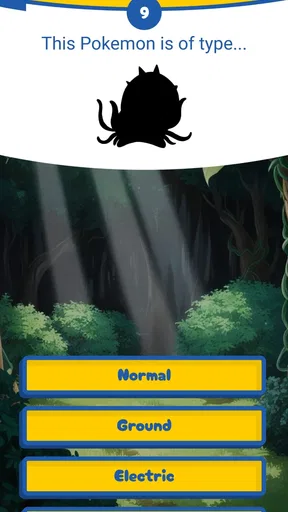
Gameplay generally revolves around answering multiple-choice or image-based Pokémon questions. You select the answer you believe is correct and receive immediate feedback before moving to the next challenge. Depending on the version and available modes, questions may cover Pokémon names, types, evolutions, abilities, games, and other franchise facts. The straightforward controls make it easy to begin without a lengthy tutorial.
Is Poke Trivia suitable for beginners and younger players?
Poke Trivia can be approachable for beginners because the basic objective is simple: read or view a question and choose an answer. However, the difficulty may increase as you progress, and some questions require detailed knowledge of Pokémon generations, evolutions, or game mechanics. Parents should still review the app’s age rating, advertising, privacy information, and any in-app purchase options before allowing younger children to use it.
Does Poke Trivia require an internet connection?
Whether Poke Trivia works fully offline depends on the specific version available for your Android or iOS device. Some quiz content may be accessible without a connection after installation, while advertisements, updates, leaderboards, analytics, or additional question packs may require internet access. It is best to check the store listing and test the app in airplane mode if offline play is important to you.
Is Poke Trivia free to download and play?
Poke Trivia may be available as a free download, but the overall experience can depend on advertising, optional purchases, or limitations placed on certain features. Before downloading, check the official Google Play or App Store listing for details about in-app purchases, subscription terms, and data collection. If the app displays frequent ads or offers paid hints and upgrades, review those options carefully to avoid unexpected costs.


